
Relationship Between Pigments, Plastic Resin and Processing Aids
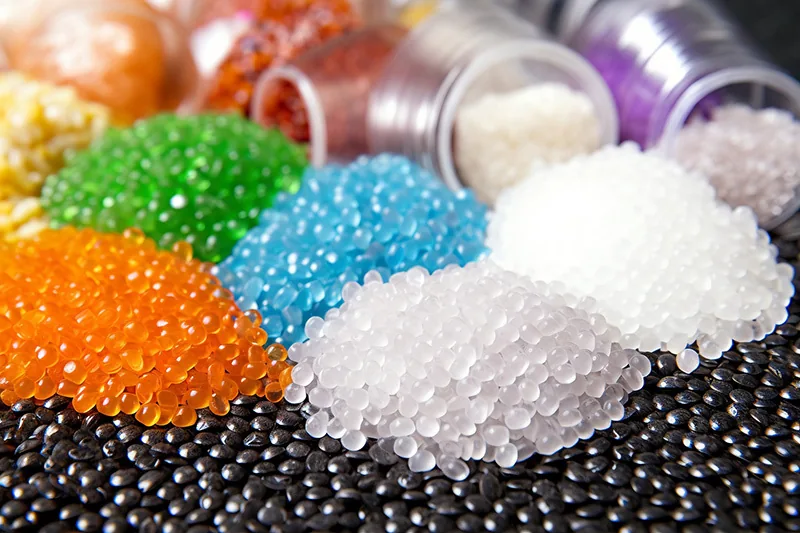
Colorants used in masterbatches must fully account for the compatibility of the colorant, the plastic carrier resin and other formulation additives. The main selection criteria are as follows:
Compatibility Requirements for Colorants
The colorant must not chemically react with the resin or any additives. It must have excellent solvent resistance, low migration and good thermal stability. In other words, the masterbatch components must not take part in any chemical reactions during processing.
A characteristic example: carbon black can catalyze the curing reaction of polyester plastics. For this reason it should not be added to polyester materials.
Since plastics processing temperatures are generally high, colorants used in masterbatches must not decompose or change color when heated. Inorganic pigments generally have good heat resistance, while organic pigments and dyes are less heat-stable. This must be taken into account when selecting a pigment grade.
Pigment dispersion and tinting strength must also be at a high level. Uneven pigment distribution degrades the appearance of the finished product, and low tinting strength requires a higher dosage, increasing material cost. Note that the dispersion and tinting strength of the same pigment can differ substantially between different resins. Generally, the smaller the pigment particle size, the better its dispersion and tinting strength.
Four Masterbatch Production Methods
Masterbatch production has demanding process requirements. A "wet" method is typically used: aqueous dispersion → phase inversion → washing → drying → pelletizing. Only this approach guarantees stable product quality. There are four main production methods.
1. Flushing/Ink Method
This method uses color pastes directly in masterbatch production. The pigment is ground on a three-roll mill, forming a protective layer of low-molecular-weight compound on the surface of each particle. The resulting pigment paste is mixed with the carrier polymer, plasticized on a two-roll mixer (open mill), and then pelletized using a single-screw or twin-screw extruder.
2. Washing Method (Phase Inversion)
The pigment is thoroughly ground together with water and a dispersant to a particle size below 1 µm. It is then transferred from the aqueous phase to the oil phase by phase inversion and dried to obtain the masterbatch. Phase inversion requires organic solvents and appropriate recovery equipment.
3. Kneading Method
The pigment is mixed with an oil-based carrier. Due to the oleophilic properties of the pigment, its particles are kneaded and transferred from the aqueous phase to the oil phase. At the same time, each pigment particle is coated with a layer of oil carrier, which disperses and stabilizes the pigment and prevents it from coagulating.
4. Metal Soap Method
The pigment is ground to a particle size of about 1 µm. At a specific temperature, soap is introduced so that it evenly wets the surface of each pigment particle and forms a soap layer. A metal salt solution is then added, which chemically reacts with the soap layer on the pigment particle surface, forming a protective metal-soap film (magnesium stearate). This prevents flocculation of the finely dispersed pigment particles and, to a degree, preserves the achieved fineness of grind.